Localization means using accepted scientific principles to solve the problems of the host community.
Without a doubt, the role of human resources in the process of sustainable development is vital and irreplaceable, as the future of every nation is determined by its people.
Increase in Migration to Metropolitan Areas as a Result of Using Non-Local Labor
In recent decades, human resources have been recognized as an intelligent element that, through skill and creativity, plays a fundamental role in any system. Efficient human resources in a country are considered one of its most valuable assets, to the extent that knowledge capital is far more important than production capital.
In this regard, what has been emphasized in our mission and in many employment expert discussions is the importance of utilizing local labor for job creation in every region and province. The disadvantages of relying on non-local labor are not limited to migration alone.
The Impact of Non-Local Labor on Costs and Workforce Composition in Ahya Sepahan Iron Ore Mines Company
It has often been observed that foreign labor, in addition to its negative cultural and social impacts on the target region, increases production costs, leading to the waste of available resources and higher final product prices.
Out of the 642 personnel of Ahya Sepahan Iron Ore Mines Company, 48 are non-local and the rest are local, meaning that approximately 92.5% of the company’s workforce consists of local employees.
Geographical Location and Accessibility of Khaf Alluvial Iron Ore Reserves
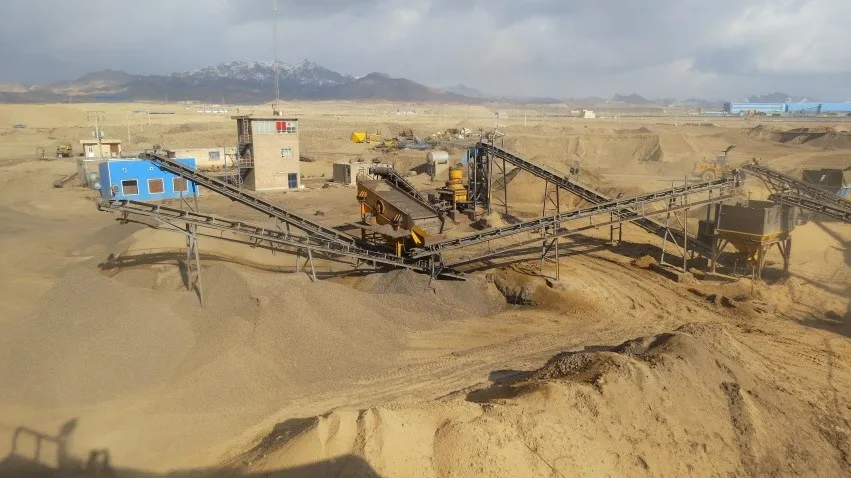
The Khaf alluvial iron ore reserves are located in Razavi Khorasan Province, Khaf County, Sangan District, adjacent to Guriab village. The area is situated 280 km southeast of Mashhad, 58 km south of Taybad, 40 km east of Khaf, and 10 km from Sangan city. The distance to the Afghanistan border is 25 km.


